

Cats of Cyprus: History, Culture, and the Quiet Charm That Shapes a Stay
Libra Arte
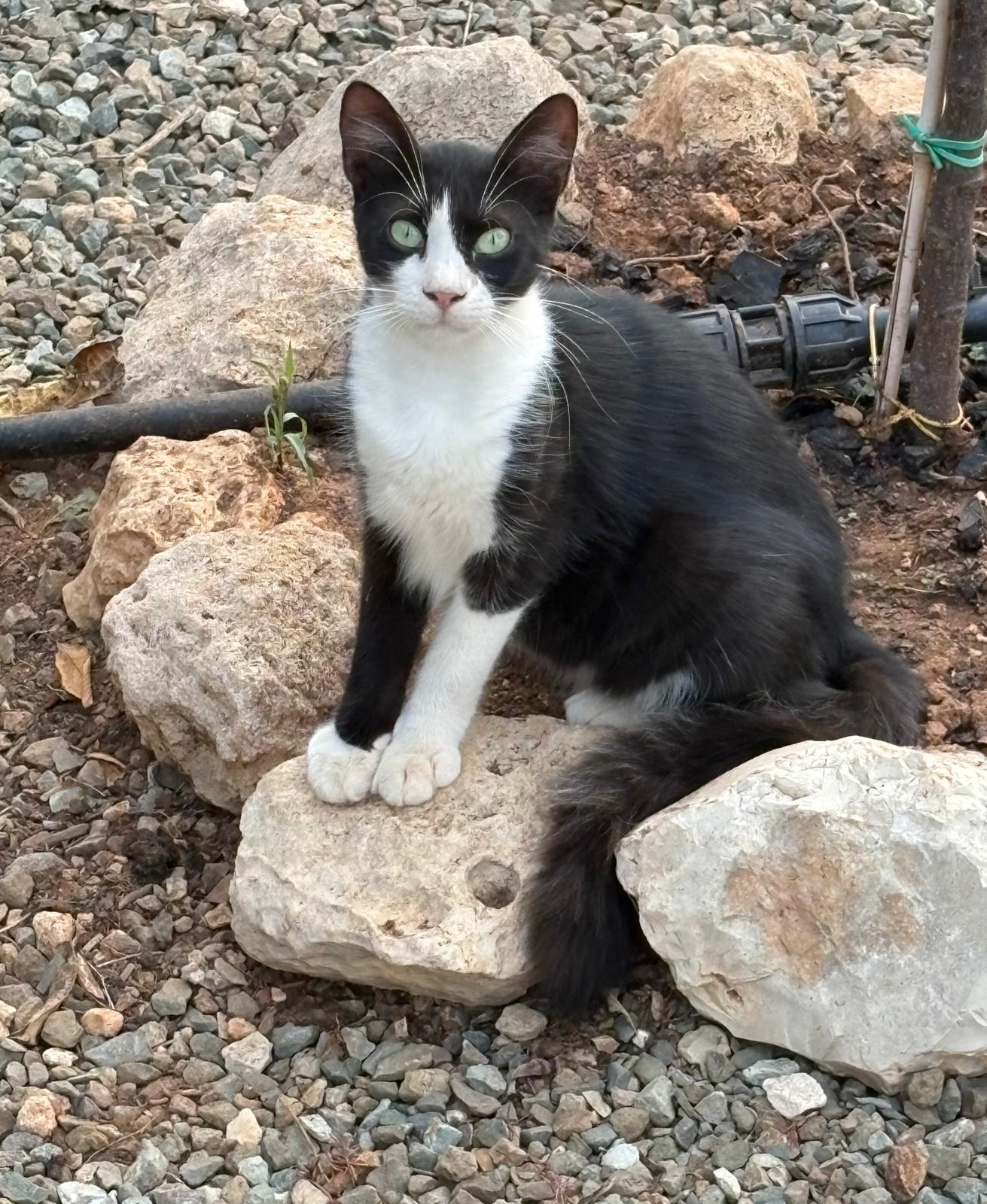
There is a detail about Cyprus that rarely appears in travel brochures, yet defines the experience more than many landmarks: cats. Not as a curiosity, but as a constant presence woven into the island’s history, ecology, and everyday life.
A Historical Origin: 4th Century AD
The remarkable population of cats on Cyprus is no coincidence. Its roots go back to the 4th century AD and are traditionally linked to Saint Helena, mother of Constantine the Great.
According to early Christian and Byzantine accounts, at that time Cyprus suffered from an overabundance of snakes in and around settlements. Helena, acting on advice from imperial administrators, is said to have ordered that cats be brought to the island — probably from Egypt and the Near East — as a practical method of controlling pests and venomous reptiles. Cats were already recognized throughout the Eastern Mediterranean as effective natural pest control agents long before modern pest management existed. The narrative of cats brought to Cyprus in the 4th century is preserved in monastic tradition and medieval travel accounts, such as those of the 15th‑century pilgrim Felix Fabri, who wrote about monasteries associated with cats and their functional role in the landscape.
Although the earliest specific written records from Cyprus itself are limited, multiple later ecclesiastical chronicles and travel journals reference this tradition of importing cats for pest control in Byzantine times.
Neolithic Evidence: Deep Roots of Human–Cat Interaction
Yet the relationship between humans and cats on Cyprus began much earlier.
In 2004, French archaeologists led by Jean‑Denis Vigne of the French National Centre for Scientific Research (CNRS) published findings in the journal Science documenting a 9,500‑year‑old burial at the Neolithic site of Shillourokambos near Limassol in southern Cyprus. In this burial, the remains of a young cat were found intentionally placed within just 40 cm (16 in) of a human skeleton, alongside ceremonial items such as polished stone tools, flint, ochre, and seashells. The careful burial strongly suggests a close relationship between the cat and the human, with the cat’s remains showing no signs of butchering. This joint burial is considered some of the earliest direct evidence of human‑cat association in the archaeological record.
The cat in this burial belonged to Felis silvestris lybica, a wildcat native to the Near East, and its association with a human suggests that people may have intentionally transported felines to the island and that relationships with them extended beyond mere utility. Cats were not native to Cyprus — the island has been separated from the mainland by roughly 60–80 km of open water since the end of the last Ice Age — meaning their presence there implies deliberate introduction by humans.
Archaeozoological research also identifies earlier cat remains in Neolithic contexts at sites such as Khirokitia (dating back over 6,000 BC), further confirming that cats arrived with human settlers rather than spreading naturally.
From Prehistory to Byzantine Times — An Island Story Told by Cats
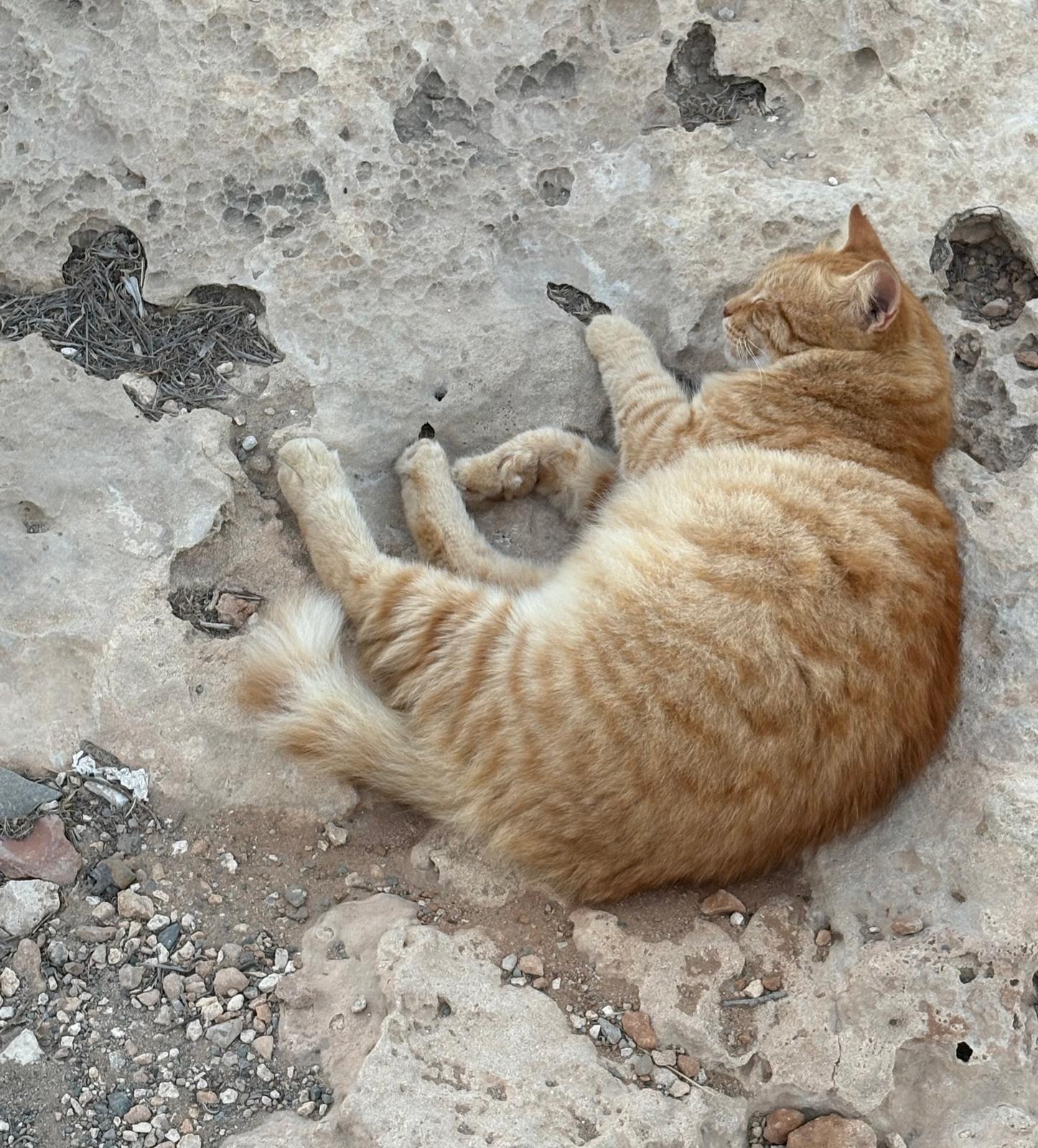
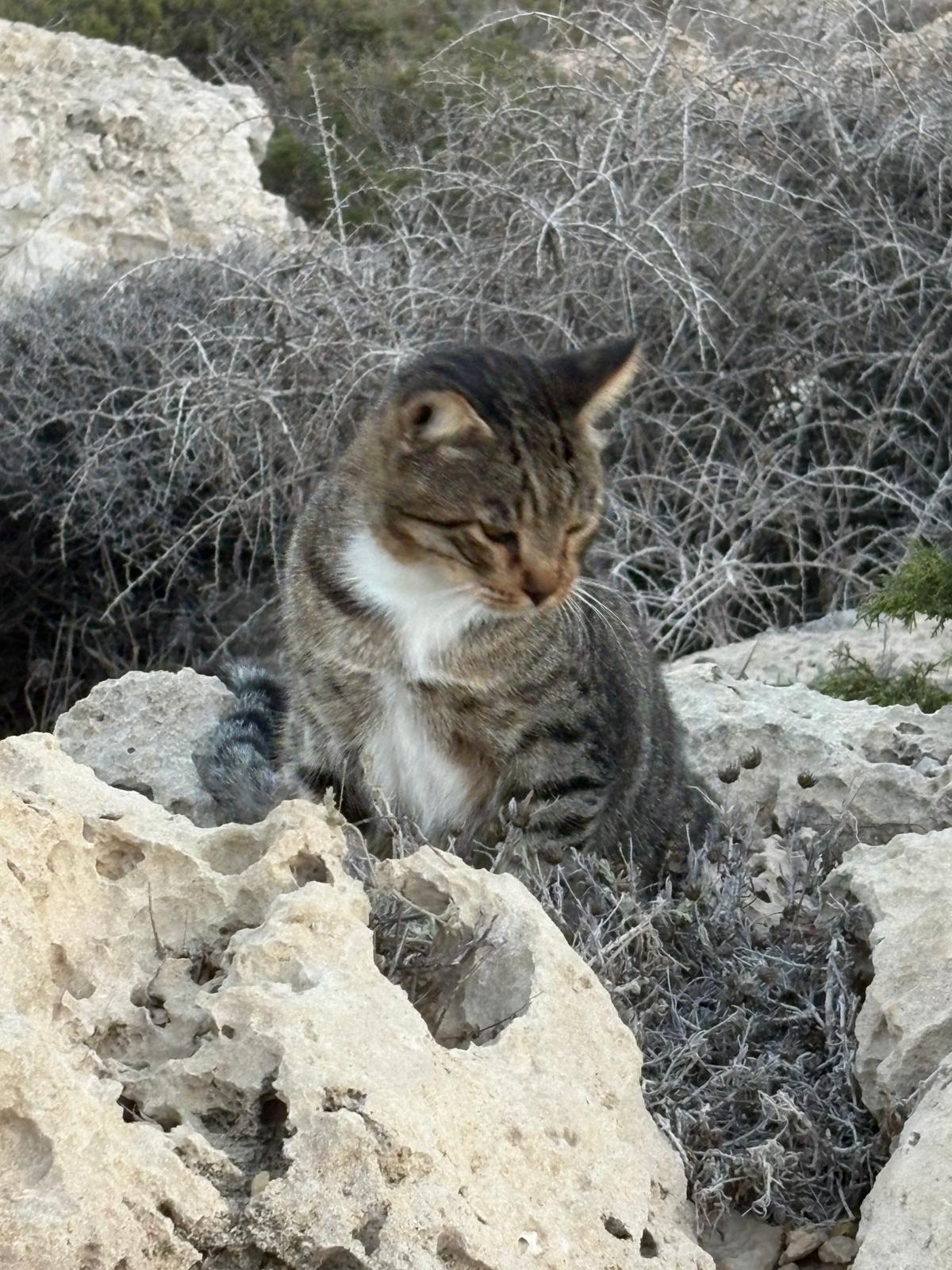
Imagine walking through a quiet Cypriot village at dawn. The sun barely touches the terracotta roofs, and the air smells faintly of jasmine and salt from the nearby sea. Out of nowhere, a cat slips past your foot, tail high, eyes glinting like amber. You stop, watch it for a moment, and suddenly it occurs to you: this cat has probably been here longer than the street itself.
Long before the Byzantines built their monasteries or the Venetians laid cobblestones, cats were already on Cyprus. Archaeologists tell us that humans brought cats here thousands of years ago — Neolithic settlers carrying not just grain, but also companions who could hunt the mice threatening their stores. At Shillourokambos, near Limassol, excavations have revealed cat remains carefully placed alongside human burials dating back over 9,500 years, suggesting that these animals were valued companions even in prehistoric times. One of those early cats might have been the ancestor of the one now sunning itself on the villa terrace, completely unimpressed by your presence.
By the time Saint Helena supposedly ordered more cats to the island in the 4th century AD — her famous mission to control snakes — there was already a tradition of felines walking among humans. Monks in remote monasteries, like those near Limassol at the Monastery of Saint Nicholas of the Cats, would ring the bell, not just to call the faithful to prayer, but to signal mealtime for the cats. These cats patrolled the grounds, chased vermin, and kept the monastery safe from snakes, quietly performing their duties without asking for acknowledgment. Felix Fabri, a 15th-century German traveller, wrote about seeing cats everywhere in monasteries, lounging in sunbeams, and moving with a confident, almost knowing presence. They weren’t pets in the modern sense — more like silent, vigilant guardians of the human settlements, companions in work and in solitude.
Cyprus is unusual. Unlike mainland Europe, there were no native wild cats here. Every whisker, every soft paw that padded through ancient courtyards came because humans had chosen to bring them. Over centuries, the cats became part of the island’s rhythm. They moved from village to monastery to port, taking a piece of every era with them, yet never asking for permission. In Venetian-era towns, they hunted among the stone fountains and alleys; under Ottoman rule, they slipped between merchants’ stalls; and under British administration, they continued to claim the courtyards and villa gardens with equal dignity.
Even the villas themselves, whether nestled among olive groves or perched on cliffs overlooking the Mediterranean, have adapted to this feline presence. It’s not uncommon to find a sun-warmed cat curled on a windowsill or a cushion adorned with a subtle cat motif — a nod to the centuries of coexistence. These small touches remind visitors that the villa experience in Cyprus is never complete without a cat quietly asserting its place in the household ecosystem.
Today, introducing cats from outside Cyprus is difficult. Strict quarantine, rabies vaccinations, microchipping, and other regulations make importing foreign cats a challenge. This means that the cats you meet in gardens, courtyards, and terraces are part of a population that has evolved organically on the island for millennia. Each one is a living thread in a tapestry woven over thousands of years — a tangible connection to the past, present, and enduring traditions of Cyprus.
And so, when you sit on the terrace of a Cypriot villa, sipping coffee, you notice a cat stretching in the sun, flicking its tail lazily. It doesn’t need to perform or impress. It is simply part of the story, a witness to the centuries, a companion to your experience. And in that moment, you realize: you are not just staying on Cyprus. You are stepping into an ancient rhythm, where humans and cats have shared the same corners of the island for thousands of years, and where every purr, every soft footstep, carries the weight of history, monastery bells, and Mediterranean sunlight.
Cats of Cyprus Today — Living History in Villa Life
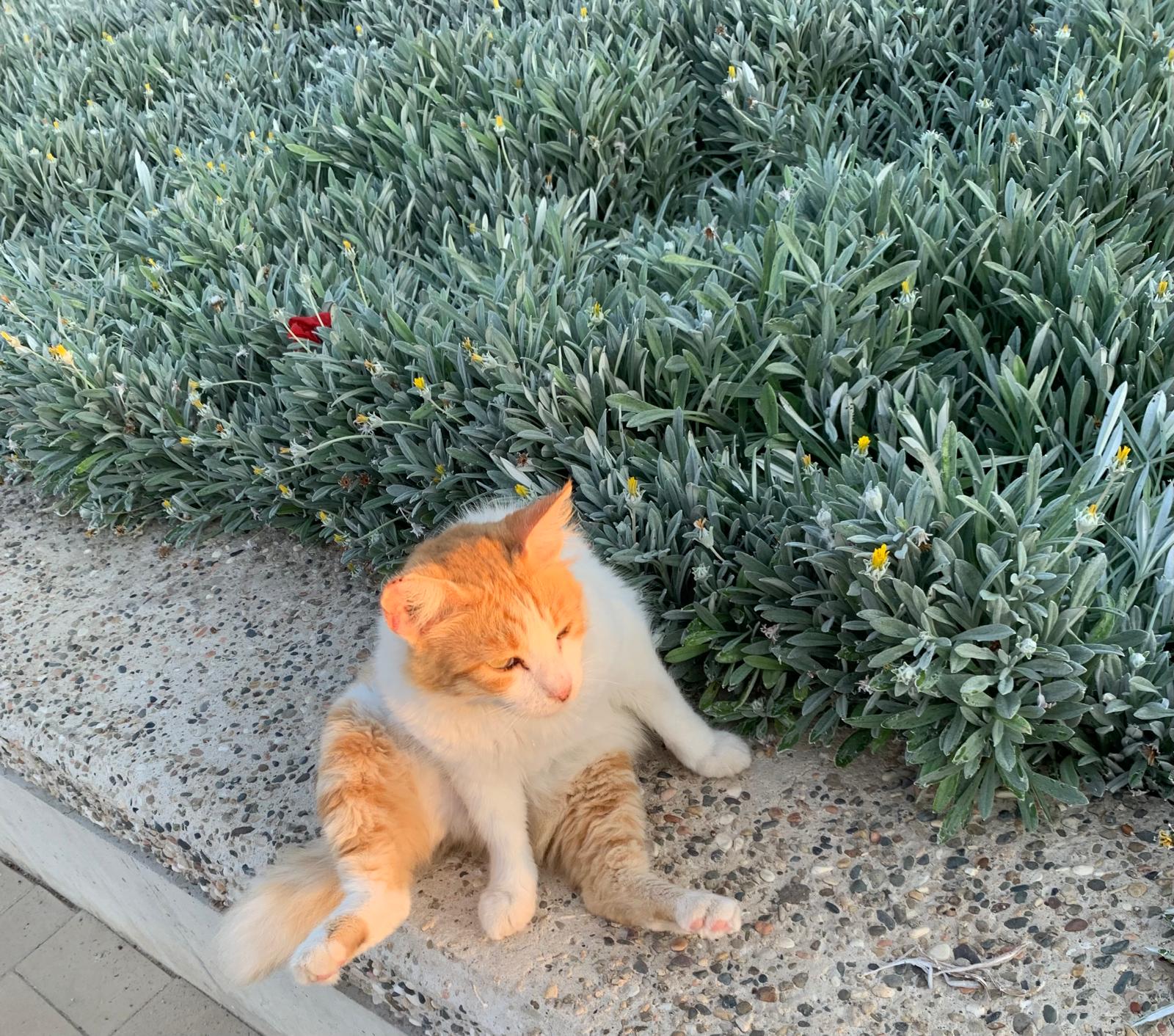
In modern Cyprus, cats remain an essential part of everyday life, now supported by organized care and community efforts. Volunteer groups and local organizations run sterilization programs, provide medical care, and ensure stable feeding routines, helping maintain a healthy balance between humans and animals.
For guests staying in villas, encountering cats becomes part of the authentic Cypriot experience. Whether resting in the shade of olive trees or wandering through sunlit courtyards, they bring a quiet sense of continuity and charm. Many properties subtly reflect this presence through thoughtful design details and garden spaces that naturally welcome these animals.
Over time, cats have also become a cultural symbol of Cyprus — featured in local storytelling, photography, and everyday island life. They connect ancient traditions with contemporary Mediterranean living, creating an atmosphere that feels both timeless and deeply personal.
Conclusion — A Timeless Companion
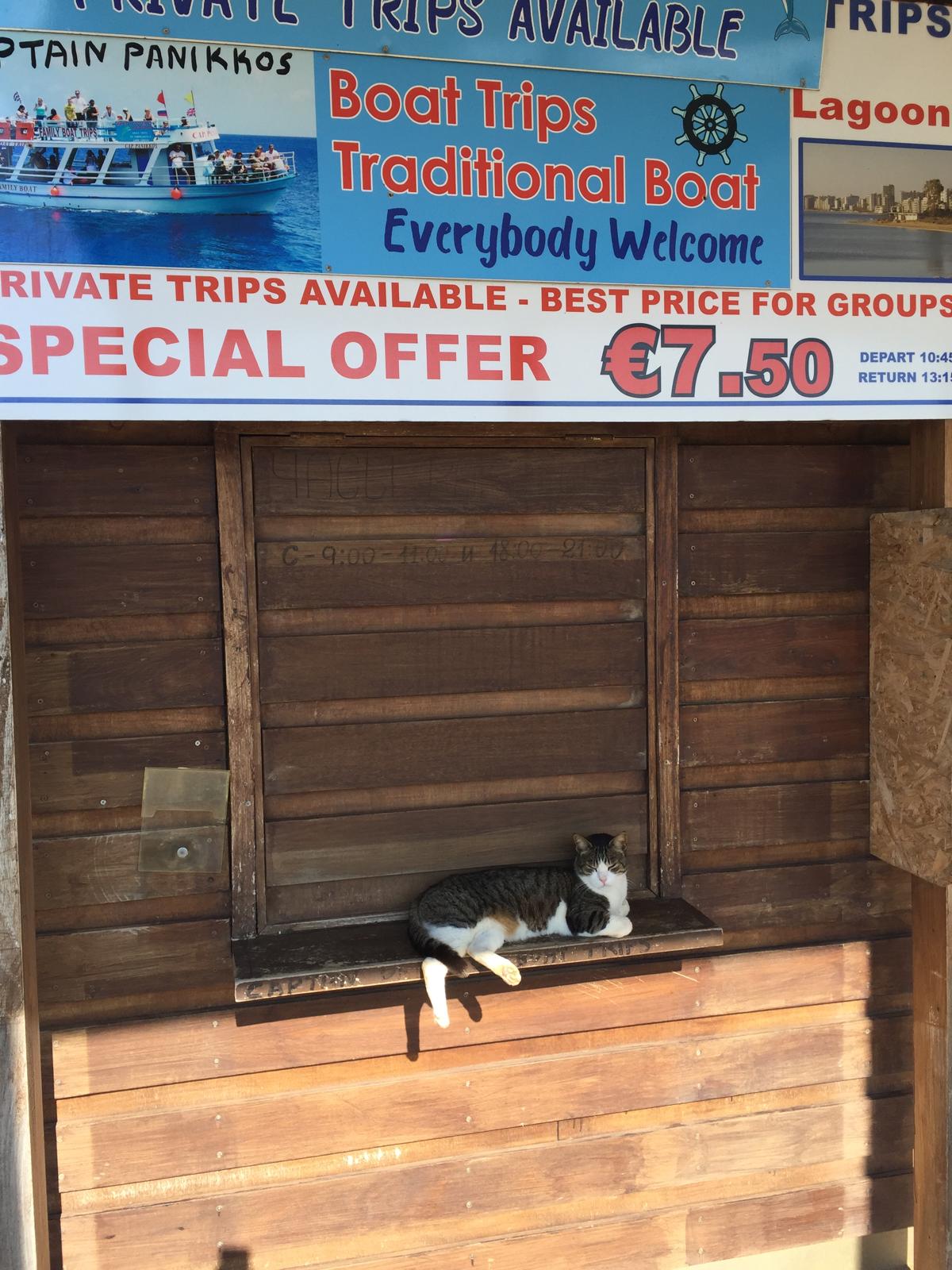
Cats in Cyprus are more than a charming detail — they are an essential part of the island’s identity and cultural heritage. From prehistoric settlements to modern villa stays, Cyprus cats have remained constant companions, shaping both the landscape and the authentic Mediterranean lifestyle.
For travelers seeking a unique experience, staying in a Cyprus villa offers more than comfort and design — it provides a connection to this living history. Watching a cat resting in the sun on a terrace or strolling through a garden becomes a quiet but memorable part of the journey.
This is the true essence of Cyprus: not only its sea views and architecture, but the atmosphere of timeless coexistence between humans and nature. Discovering the presence of cats in Cyprus means experiencing the island in a deeper, more authentic way — where every moment reflects centuries of tradition and Mediterranean charm.
Categories
Tags
Cyprus NatureLuxury VillaMediterranean lifestyleAncient historyByzantine Cyprus
Share to social media