
Kykkos: The Icon, the Emperor and the Mountain That Would Not Give Up Its Secret
Libra Arte
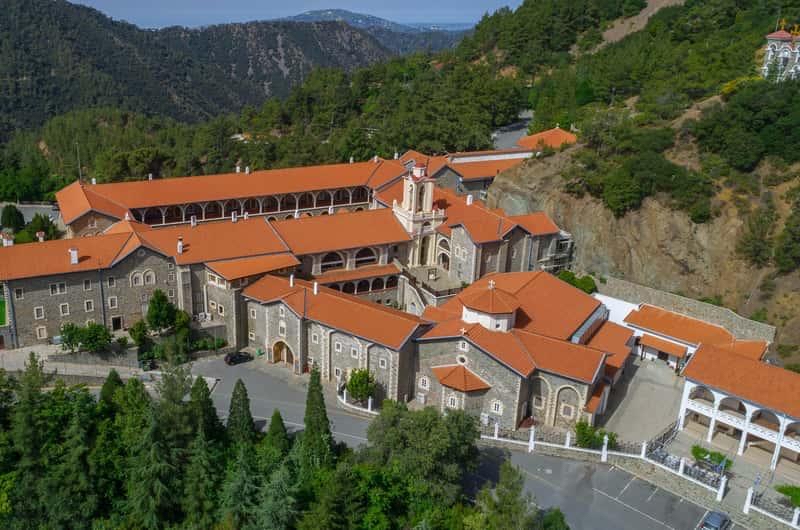
High in the Troodos Mountains, where the road winds through forests of pine and the air grows cooler with every turn, stands one of the most extraordinary places in Cyprus — Kykkos Monastery.
At first, it is the landscape that takes your breath away.
The familiar Cyprus of bright beaches, warm sea and whitewashed resorts seems to belong to another world. Here, the mountains rise around you, the scent of pine fills the air, and the road disappears into a landscape that feels older than the villages below.
When the monastery finally comes into view, it is difficult not to wonder why such an imposing sanctuary should have been built in such remote a place.
The answer lies in a story that began almost nine centuries ago - long before there was a road to Kykkos, long before Cyprus became the island we know today, and at a time when Constantinople was still the glittering centre of the Byzantine world.
It is a story involving a hermit who lived alone in the mountains, a powerful governor who lost his way, an emperor who was asked to surrender a sacred treasure, a mysterious illness, a journey across the sea, and an icon whose destiny, according to tradition, had already been decided.
And somewhere along the way, quite unexpectedly, a bee enters the story.
But let us begin at the beginning.
The Hermit and the Governor
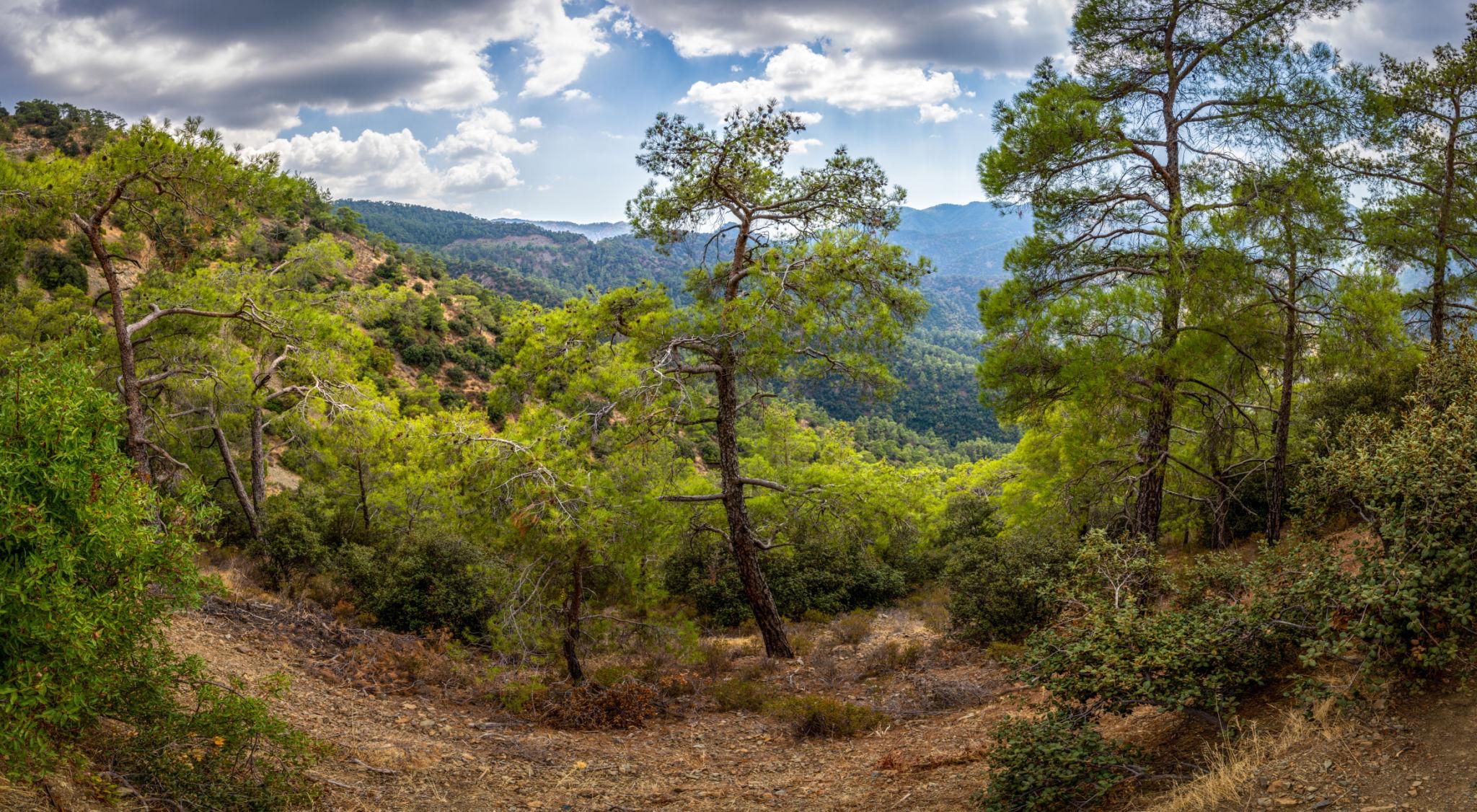
In the eleventh century, the highlands of Cyprus bore little resemblance to the landscape through which we travel today. The Troodos Mountains were largely a wilderness of dense woodland, ravines and remote paths, and the further one ventured into them, the more completely the ordinary world seemed to fall away.
It was in this solitude that a hermit named Isaiah had chosen to live.
According to the traditional account, Isaiah had withdrawn from worldly affairs and devoted himself entirely to prayer and contemplation. His existence was austere and deliberately secluded; the forest was his surroundings, the cave his dwelling, and solitude his chosen companion.
Then, one day, the silence of that life was interrupted by the arrival of a very different kind of man.
Manuel Boutoumites, the Byzantine governor of Cyprus, had ventured into the mountains while hunting. Somewhere among the forests he lost his way and eventually encountered Isaiah.
Boutoumites asked the hermit to guide him.
Isaiah, however, did not respond.
Whether he deliberately ignored the governor or simply remained indifferent to the worldly authority Boutoumites represented, tradition leaves us with the striking image of a powerful official standing before a man who regarded his rank as entirely irrelevant.
Boutoumites took the silence as an affront.
According to the monastery’s traditional history, he became angry, insulted the hermit and treated him harshly before continuing on his way.
He returned to the world from which Isaiah had withdrawn.
Yet the encounter, apparently insignificant at the time, was about to alter the lives of both men.
Not long afterwards, Boutoumites was overcome by a serious and mysterious illness, traditionally identified as lethargia. His condition deteriorated to such an extent that neither his physicians nor the considerable resources available to a Byzantine governor could offer him relief.
In the solitude imposed upon him by illness, his thoughts returned to the mountains.
He remembered Isaiah.
He remembered the encounter.
And, above all, he remembered the promise he had made: if he recovered, he would return to the hermit and ask his forgiveness.
According to the tradition, he did recover.
When he returned to Isaiah, however, the hermit did not ask for punishment or recompense. Instead, he made a request so extraordinary that it would carry their story far beyond the forests of Cyprus and into the heart of the Byzantine Empire.
Isaiah asked Boutoumites to bring to Cyprus a particular icon of the Virgin Mary.
It was not merely an ancient religious image. It was an icon of immense prestige, preserved in the imperial palace at Constantinople and traditionally attributed to Saint Luke the Evangelist.
The request must have sounded almost absurd.
For Boutoumites was not being asked to obtain a relic from an ordinary church. He was being asked to persuade the Byzantine emperor himself to surrender one of the most precious sacred objects in his possession.
And so the story moved from the quiet of a hermit’s cave to the magnificence of the imperial court.
The Emperor and the Icon
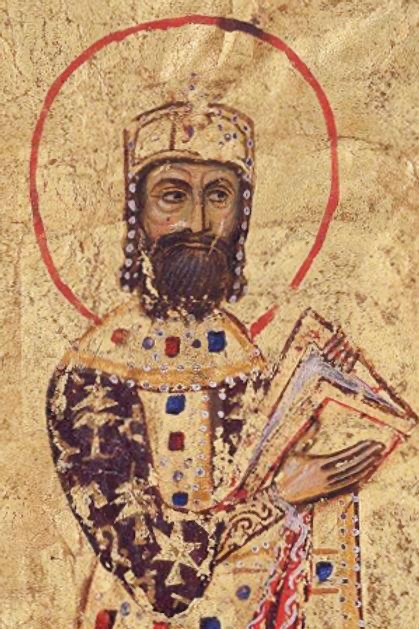
To understand the magnitude of Boutoumites’ request, one has to remember what Constantinople represented in the eleventh century.
It was not simply the capital of an empire. It was the political, intellectual and spiritual centre of Byzantium — a city whose churches glittered with mosaics, whose palaces housed generations of emperors, and whose sacred treasures were regarded not merely as possessions but as objects of profound religious significance.
At its centre stood Alexios I Komnenos, a formidable emperor whose reign was marked by military struggles, political intrigue and the constant effort to preserve an empire under pressure.
Into this world came Boutoumites with Isaiah’s extraordinary request.
He was asking the emperor to surrender the icon of the Virgin.
Naturally, Alexios hesitated.
One can easily imagine why.
An emperor might grant land, titles or money; he might negotiate alliances or surrender territories when circumstances demanded it. But to relinquish a sacred image revered within the imperial household was something of an entirely different nature.
The matter remained unresolved.
Then, according to the ancient tradition, circumstances changed in a manner that made the emperor reconsider what had previously seemed impossible.
His daughter fell gravely ill.
Her condition became increasingly alarming, and the physicians of the imperial court proved unable to restore her health. It was then that Boutoumites remembered his own illness — and the strange circumstances surrounding his recovery.
He returned to the emperor and told him once again of Isaiah, of the promise, and of the icon that the hermit believed should be brought to Cyprus.
For Alexios, the request had acquired an entirely different meaning.
According to the tradition, he finally consented.
The icon would be sent to Cyprus.
And the emperor’s daughter recovered.
The promise had been fulfilled.
Yet the emperor now faced a dilemma of his own making.
He had agreed to surrender the icon, but agreement did not make the loss any easier to accept. The image had been part of the imperial world, and Alexios could not simply imagine it gone.
So, secretly, he commissioned a skilled painter to reproduce it.
The plan was ingenious: if the copy could be made sufficiently convincing, perhaps it could be sent to Cyprus in place of the original, while the precious icon remained in Constantinople.
It was an understandable attempt to reconcile duty with attachment.
But according to the tradition of Kykkos, the emperor’s plan was not to succeed.
The Choice of the Bee
There are several traditions surrounding the final decision, and one of the most evocative tells of a moment almost too perfectly symbolic to have been invented by accident.
The original icon and the newly painted copy were placed before the emperor.
The question was simple, although its consequences were anything but:
Which one was to be taken to Cyprus?
According to one old Cypriot tradition, before the emperor could make the decision, a bee appeared.
It circled the two images and eventually settled upon the original.
A tiny creature, insignificant beside the splendour of the imperial court, had apparently made the decision that the emperor himself had been reluctant to make.
The original would go to Cyprus.
The copy would remain behind.
It is worth treating the episode as legend rather than established historical fact; the official tradition preserved by Kykkos places the decisive moment elsewhere, in a dream in which the Virgin made clear to the emperor that the original icon was to be sent to Cyprus.
Nevertheless, the story of the bee has become inseparable from the mythology of Kykkos, and its symbolism is particularly fitting. Centuries later, the bee was adopted as the emblem of the monastery’s abbot, representing diligence and order.
Thus a small creature that appears only briefly in the legend acquired a permanent place within the identity of the monastery itself.
The icon’s destiny, however, was no longer in question.
The original was prepared for its journey.
It left Constantinople, crossed the sea, and arrived in Cyprus.
Yet even then, its journey was far from complete.
For its destination was not the coast, nor any prosperous city of the island.
It was the mountains.
Into the Wilderness
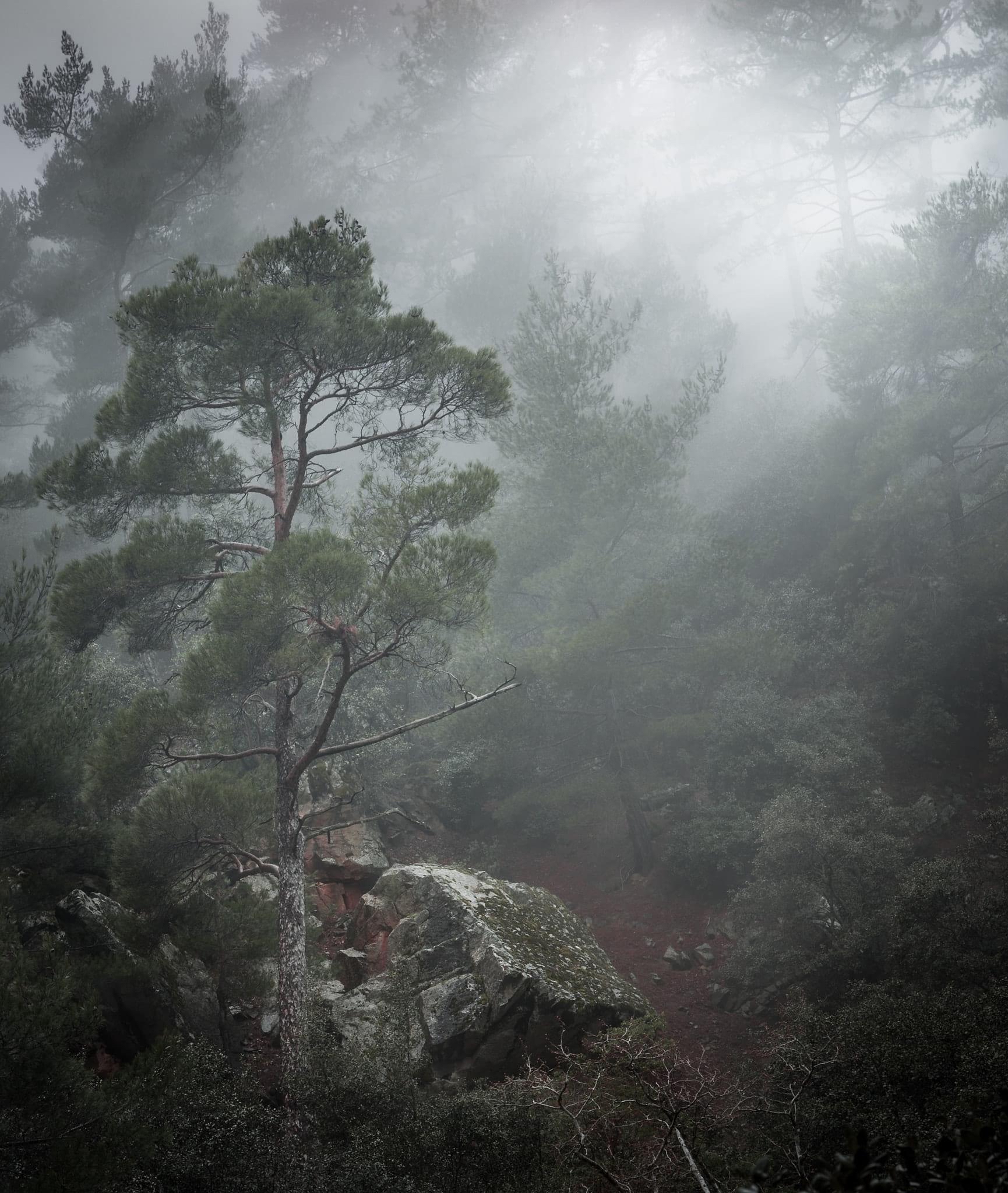
It is perhaps here that the story acquires its most beautiful imagery.
The Cyprus through which the icon travelled was a world without the roads we know today. The mountains were remote, heavily wooded and difficult to cross, and the sanctuary awaiting the icon lay deep within the Troodos range.
The procession made its way upwards.
And according to tradition, the forest itself seemed to respond to the arrival of the sacred image.
The trees bent towards the icon as it passed, their branches inclining as though in reverence.
Whether one accepts the story literally is, perhaps, less important than understanding why such an image has survived for so many centuries.
Legends often preserve not the details that can be measured, but the meaning that communities attach to an event.
The icon was not merely being transported from one place to another.
It was, in the imagination of generations of believers, being welcomed by the island itself.
At last, high in the mountains, a church was established for the sacred image, and a monastery grew around it with the patronage of Emperor Alexios I Komnenos.
The icon had reached its home.
And the place that would become Kykkos had acquired the reason for its existence.
The Golden Girl
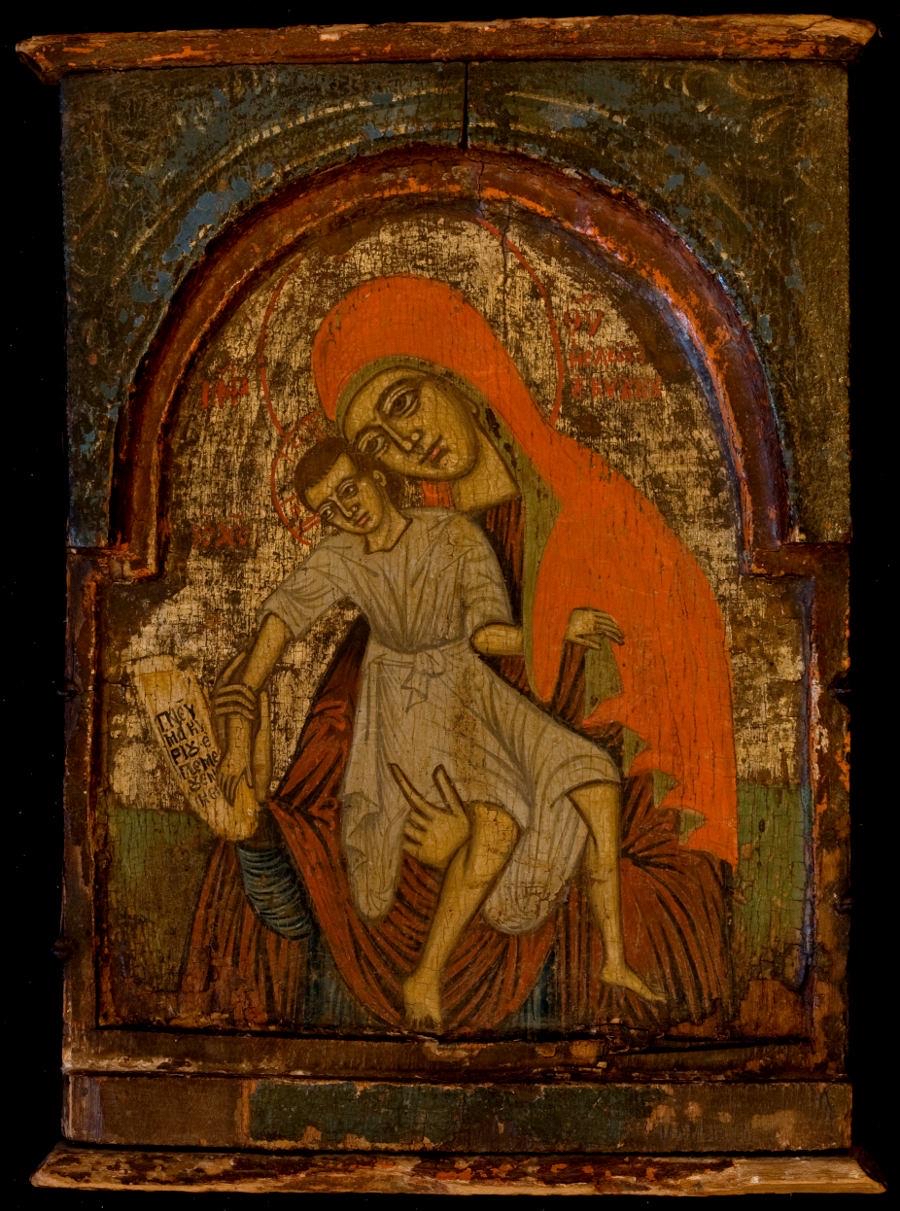
There is another tradition, stranger still, concerning the origins of the monastery.
A mysterious bird, said to possess a human voice, was believed to have proclaimed a prophecy: upon this mountain a monastery would one day rise, and within it would enter a golden girl who would never leave.
The meaning of the prophecy became apparent with the arrival of the icon.
The golden girl was the Virgin.
And she remained.
The simplicity of the image conceals something rather profound.
The centuries that followed would transform almost everything around Kykkos. Dynasties would disappear, empires would collapse, political borders would be redrawn, and Cyprus itself would pass through successive periods of foreign rule.
The monastery would suffer catastrophe.
Its buildings would burn.
Its treasures would be threatened.
And yet the icon would remain at the centre of the sanctuary.
The golden girl had entered.
She would not leave.
What the Fires Could Not Destroy
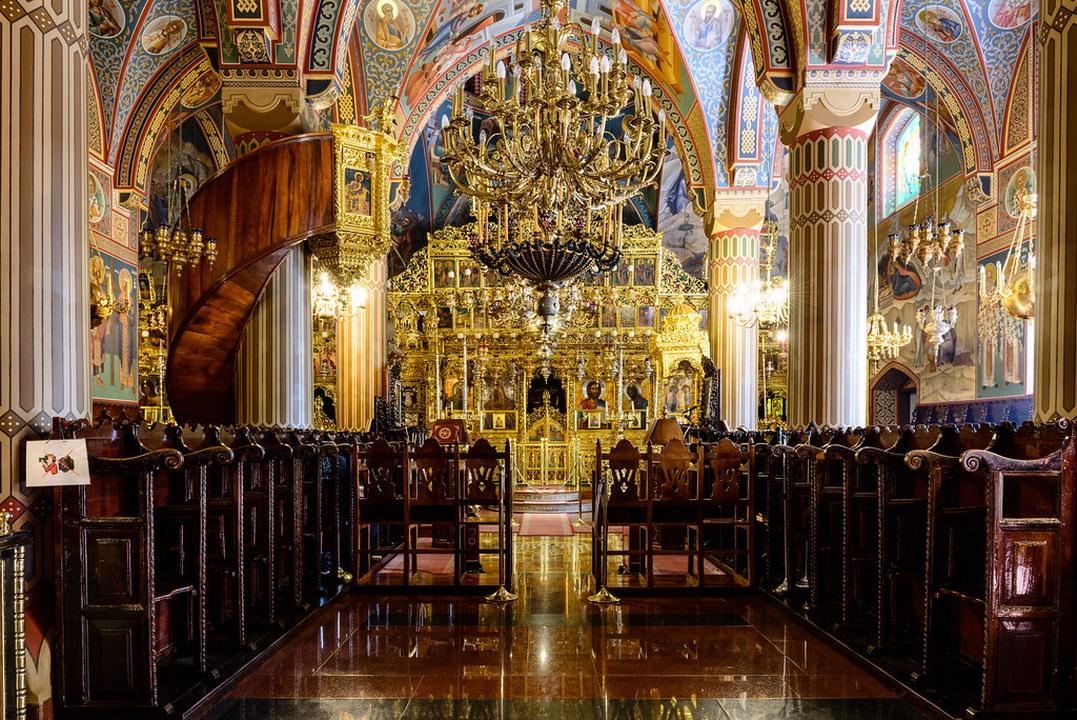
The monastery standing before visitors today is not the monastery that was founded in the eleventh century.
Kykkos has suffered several devastating fires throughout its long history, and the original buildings were repeatedly destroyed and rebuilt. What survives today is therefore the product of many generations rather than a single medieval moment.
There is something almost fitting in this.
Kykkos was never preserved as a monument frozen in time.
It survived by being rebuilt.
Its architecture carries the visible consequences of history: destruction followed by renewal, loss followed by reconstruction.
The buildings changed.
The centuries changed.
The people changed.
But the reason for the monastery’s existence remained remarkably constant.
The icon was still there.
And therefore, after every catastrophe, there remained something worth rebuilding around.
The Icon Behind the Silver
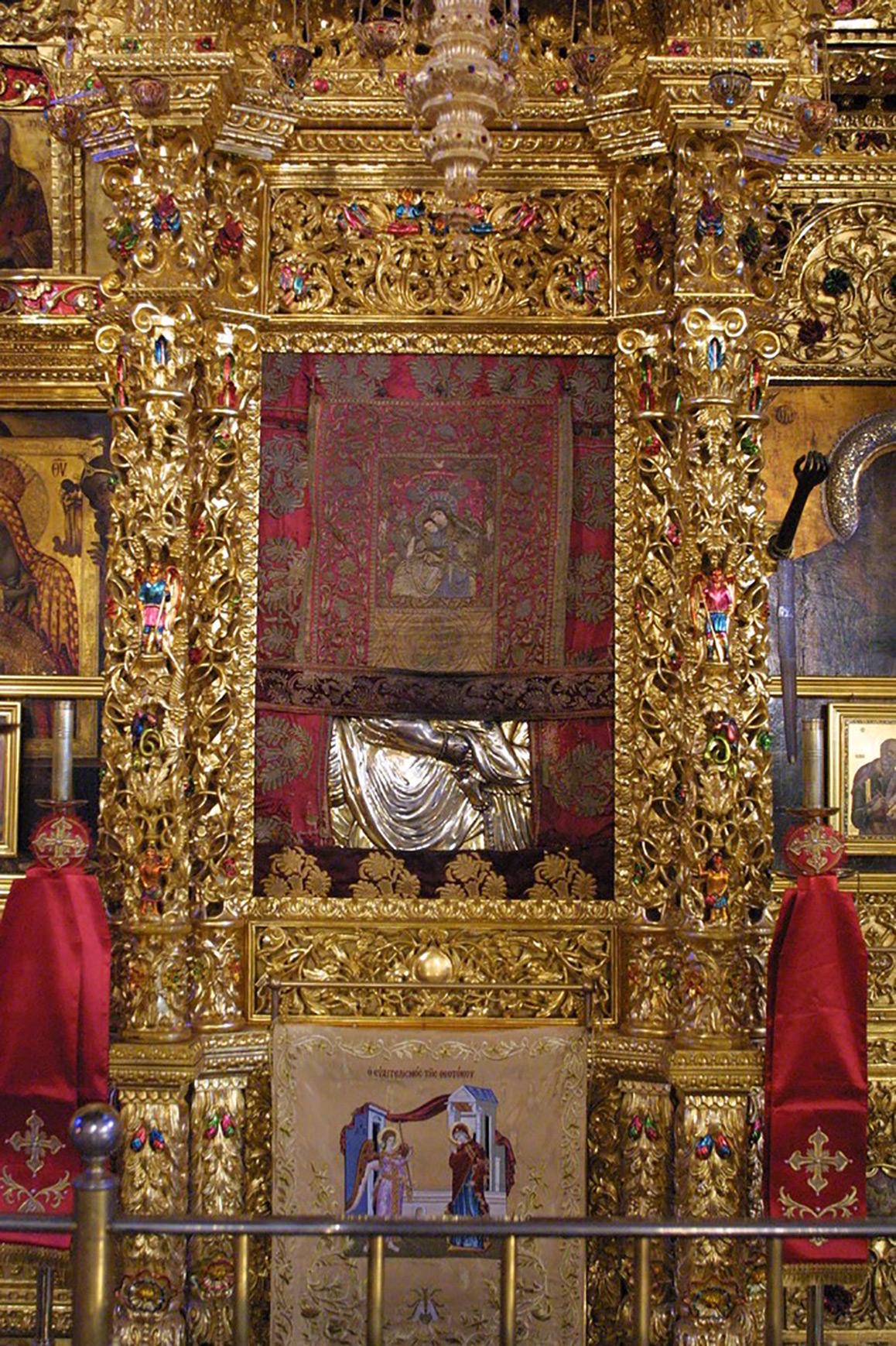
Eventually, every story about Kykkos leads to the same place: the icon itself.
Known as Panagia Kykkotissa, the Virgin of Kykkos occupies the spiritual centre of the monastery.
Tradition attributes the image to Saint Luke the Evangelist, although such an attribution belongs to the realm of ecclesiastical tradition rather than something that can be established with certainty through modern art history.
The icon is protected beneath an elaborate silver-gilt covering and housed within a richly decorated shrine incorporating tortoiseshell and mother-of-pearl.
And here, unexpectedly, lies one of the most intriguing aspects of the experience.
You cannot simply stand before the icon as you would before a painting in a museum.
Much of the original image remains concealed beneath its precious covering.
The visitor encounters the shrine, the metalwork, the accumulated signs of devotion — but not the complete painted image in the ordinary sense.
It creates an unusual tension between revelation and concealment.
For centuries, pilgrims have travelled towards this remote mountain sanctuary in order to approach an image that does not entirely reveal itself.
Perhaps that is part of its enduring power.
We are naturally drawn towards what remains partially hidden; mystery invites the imagination to complete what the eye cannot see.
From the Mountain to Modern Cyprus
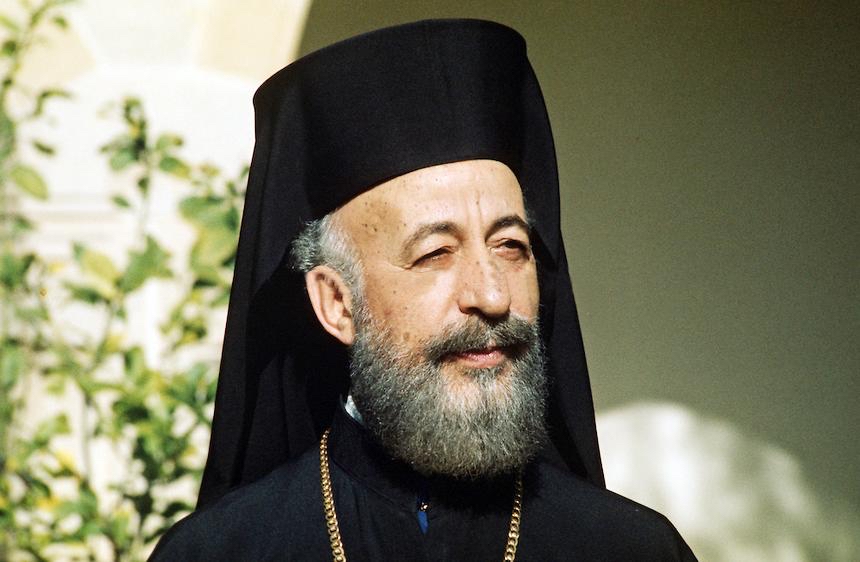
There is another remarkable thread connecting Kykkos with the modern history of Cyprus.
Long after the monastery’s Byzantine origins had passed into history, a young man entered Kykkos as a novice.
His name was Makarios.
He would later become Archbishop Makarios III — the first President of the Republic of Cyprus.
The coincidence is more than merely interesting.
A monastery founded under a Byzantine emperor, at a time when Cyprus belonged to an entirely different political and cultural world, eventually became part of the formative years of the man who would lead the island into its modern republican era.
The centuries between those two moments seem almost impossible to bridge.
And yet the mountain did it.
Kykkos remained a constant presence while the world around it transformed almost beyond recognition.
Leaving Kykkos
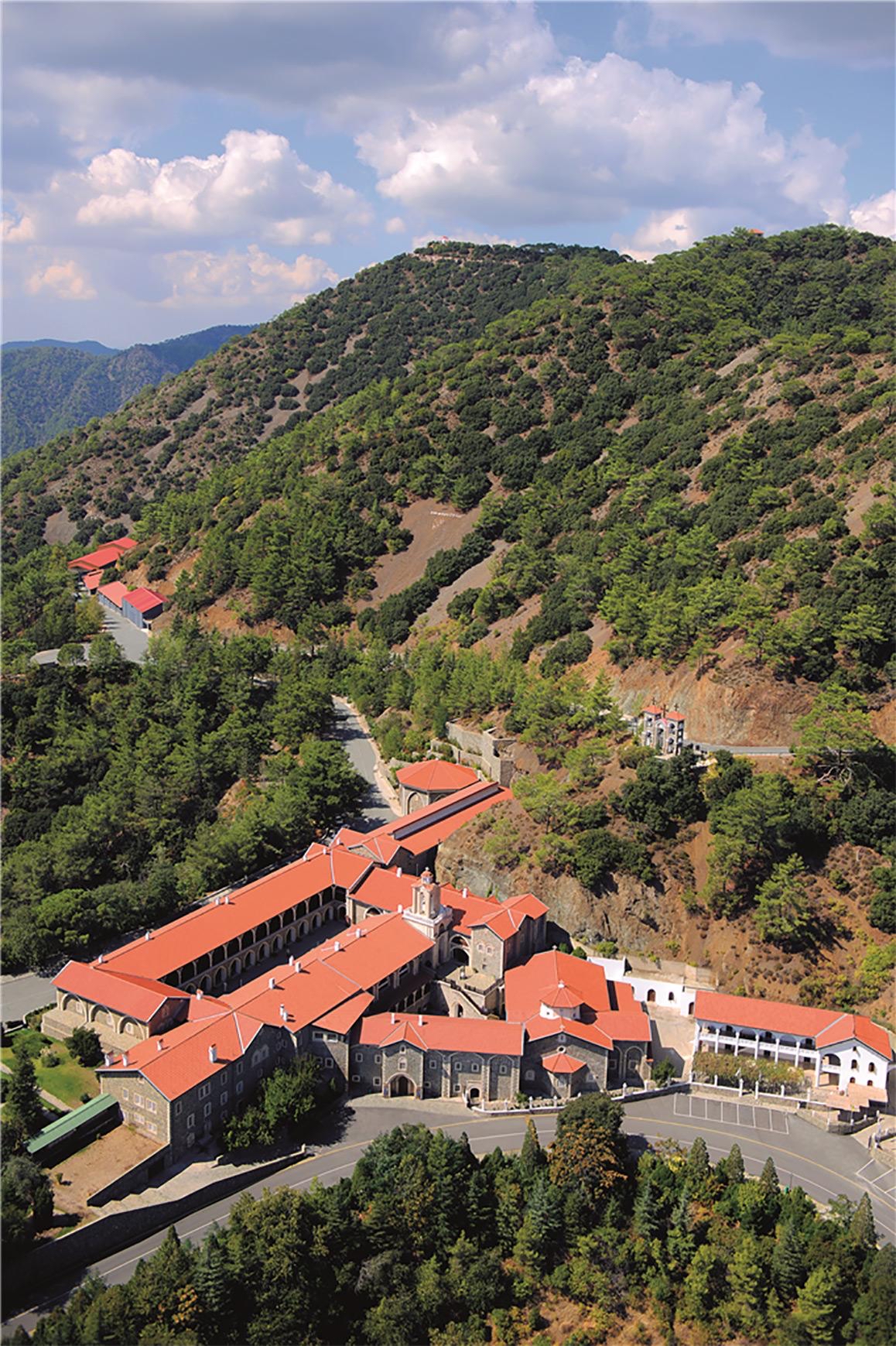
Eventually, however, every visitor must leave.
The road begins to descend through the pine forest, the monastery disappears behind the trees, and gradually the mountains give way to the warmer landscape of the island below.
Yet Kykkos has a way of remaining in the mind.
Perhaps because its story refuses to belong entirely to one category.
It is history, but it is also legend.
It is architecture, but architecture alone cannot explain its significance.
It is a monastery, yet its deepest story begins with an icon.
And that icon itself carries a history that reaches from the Byzantine imperial court to a remote mountain sanctuary in Cyprus.
There is the hermit Isaiah, who wanted nothing from the world except that a sacred image should be brought to the mountains.
There is Boutoumites, the proud governor whose encounter with a solitary monk changed the course of his life.
There is Emperor Alexios, torn between his duty and his unwillingness to surrender a treasure he regarded as almost irreplaceable.
There is the mysterious bee of the old tradition.
There are the trees that supposedly bowed as the icon passed.
There is the golden girl of the prophecy.
There are the fires that destroyed the monastery, and the generations who rebuilt it.
There is the icon, still concealed beneath silver and gold.
And there is the mountain itself, standing quietly above the island while almost nine centuries of history have passed below.
Perhaps this is why Kykkos deserves more than a hurried visit and a photograph.
Because when you know the story, the monastery no longer appears simply as an impressive building hidden in the Troodos Mountains.
You begin to see it as the final chapter — at least for now — of a journey that began with a hermit’s request and crossed an empire before finding its home in Cyprus.
And perhaps, as you make your way back down towards the sea, you will remember the smallest detail of all.
The bee.
A creature so small that an emperor would scarcely have noticed it.
Yet in the old story, it was the bee that settled the question no one else could answer.
Which icon was the true one?
Which one was meant for Cyprus?
The answer, according to the legend, was given not by an emperor, nor by a painter, nor by a governor.
It came from something infinitely smaller.
And perhaps that is the kind of ending a story like Kykkos deserves:
not a grand declaration, but a small mystery carried quietly down the mountain.
The icon came to Cyprus almost nine hundred years ago.
And she never left.
If you are staying at LibraArte Villa in Protaras, Kykkos Monastery can be a wonderful destination for a day trip - especially for those who want to discover the spiritual, historical and artistic side of Cyprus beyond its famous beaches.
Categories
Tags
Historical & CulturalPlaces & Civilizations
Share to social media